Basics

216 N Marshall Ave

Litchfield MN 55355

(320)693-2483

All Pioneerland

While all Pioneerland Library System buildings remain closed to the public due to the COVID-19 pandemic, Curbside Pick-up of library items is available. You may place items on hold using the online catalog. Library staff will call you to schedule a pickup time once your hold is ready. Pickup days/times vary by location. Please contact your library if you have questions or need assistance in using this service.

Showing posts with label fiction. Show all posts

Friday, May 4, 2018

Outstanding books by Minnesota authors


By Beth Cronk, Litchfield head librarian

The 2018 Minnesota Book Awards were presented on April 21. This was the 30th annual awards ceremony, which is sponsored by the Friends of the St. Paul Public Library.  These awards celebrate Minnesota authors and illustrators.

This year’s award for children’s literature went to A Different Pond by Bao Phi.  This picture book tells a story from Phi’s childhood.  He would wake up early with his father to fish in a Minneapolis pond before his father went to work, as a way to help feed their family, and his father would tell him about a different pond he used to go to in Vietnam.  “A Different Pond” was also a Caldecott Honor Book this year, and we have it at the Litchfield Library.

The award for genre fiction went to The End of Temperance Dare by Wendy Webb.  This Gothic thriller is set in a former tuberculosis sanatorium, now turned into an artists’ retreat.  The new director is expecting a peaceful change from her old job as a crime reporter, but a sense of impending doom strikes her as soon as she arrives on the grounds, and she begins to suspect that the artists have been gathered there for a sinister purpose.  The Litchfield Library also has a copy of this novel.

Linda LeGarde Grover won the award for memoir and creative nonfiction with Onigamiising: Seasons of an Ojibwe Year. Onigamiising is the Ojibwe name for Duluth, “the place of the small portage.”  Grover is an Ojibwe elder and a professor at the University of Minnesota – Duluth.  The essays in this collection originally were published as monthly columns in the Duluth Budgeteer newspaper, and they are reflections on life through the seasons of the year.  Litchfield Library has this memoir.

The novel and short story award went to What It Means When a Man Falls from the Sky by Lesley Nneka Arimah.  This is a collection of fantastical short stories about the ties between family members, lovers, and friends, and between them and the places they call home.  Arimah has previously won awards for her stories in magazines; this is her first book, and it has also won a number of honors.  The Litchfield Library owns a copy.

The award for poetry went to Heid E. Erdrich for Curator of Ephemera at the New Museum for Archaic Media.  Heid is a professor at Augsburg University, a member of the Turtle Mountain Band of Ojibwe, and the sister of novelist Louise Erdrich.  This is her second book of poetry to win the Minnesota Book Award.  Communication and technology are the themes of this collection, which is on order for the Litchfield Library.

Andrea Swensson is the host of The Local Show on the radio station The Current.  She won this year’s award for Minnesota Nonfiction with Got to Be Something Here: The Rise of the Minneapolis Sound.  This book explores the development of R&B, funk, and soul in the Twin Cities, starting with 1958, the year Prince was born.  This book is available at the Dassel and Glencoe libraries and can be ordered by our patrons.

The other winning books were The End of the Wild by Nicole Helget (middle grade literature), The Exo Project by Andrew DeYoung (young adult literature), and The First and Only Book of Sack: 36 Years of Cartoons for the Star Tribune by Steve Sack (general nonfiction).  Read Minnesotan!

Friday, June 24, 2016

What will you read this summer?

What are you going to read this summer?  Summertime always brings lists of books recommended for bringing along on vacation or to the beach.  I’ve been looking through the lists that are out so far, looking for the ones the book reviewers agree on.  Following are several of the books we have at the Litchfield Library that are getting a lot of press.

Annie Proulx has a new novel out titled Barkskins.  Proulx is famous for writing The Shipping News, which won both a Pulitzer and a National Book Award, and Brokeback Mountain.  Barkskins is an epic story of a family working in the lumber business.  It begins in the 1600s with a Frenchman enduring great hardship as he takes down trees in the vast North American forests.  The story continues through the generations and across continents through more than 300 years of history as humanity levels forest after forest.  A wide range of reviewers are praising the fascinating characters and the beautiful and compelling writing in this one.

Emma Straub’s The Vacationers was one of the beach reads of 2014.  This year her novel Modern Lovers is getting a lot of attention.  It asks: what happens when you age out of being cool?  A group of college friends who used to have a band have hung onto being hip, but now their children are going off to college themselves.  Living now as neighbors, with the trappings of adulthood, these friends grapple with what being an adult truly means.  Despite the depth, this book is described by many reviewers as entertaining.

I was at a meeting of librarians recently and the book I heard about over lunch was The Nest by Cynthia D’Aprix Sweeney.  It’s been showing up on many published summer book lists, too.  This novel is about four adult siblings who are waiting for their inheritance to be distributed once the youngest turns forty.  They have all made life decisions in anticipation of this windfall, but one brother causes an accident and ends up endangering that money for all of them.  The writing is described as warm and funny even though the family is highly dysfunctional. 

Eligible by Curtis Sittenfeld is a modern retelling of Pride & Prejudice, the classic by Jane Austen.  Liz is a magazine writer and Jane is a yoga instructor, both living in New York City.  They return to their parents’ home when their father has a health scare, and they rejoin life with their directionless younger sisters and their mother who wants them all to get married before they get too old.  Of course, Dr. Bingley and his friend Dr. Darcy are new in town.  Reviewers say it’s clever and charming.

And finally, Stephen King has come out with the final book in his Bill Hodges trilogy, End of Watch.  The first two books are Mr. Mercedes and Finders Keepers.  Library Journal says that one would expect the prolific King to run out of ideas by now, but this is one of the most original crime thrillers to come out in years.  If you like Stephen King, you won’t be able to put this one down.


Whether you’d like to read some fluffy romance or some dense historical nonfiction this summer, we can set you up with what you need.  If you want the most popular book in our library system right now, A Man Called Ove, you may have a bit of a wait.  Leave it to a Swedish book about a curmudgeon and his neighbors to appeal to Minnesotans.  Take a look at our shelf of new books to pick up some of the newest fiction and nonfiction that’s available right now, or place an order for something popular or obscure.  Enjoy the summer days as you relax with a good book!

Thursday, March 24, 2016

What inspires you?

by Beth Cronk, Litchfield head librarian

One thing I’ve learned from being in a book club and from being a librarian is that different stories inspire different people.  Some people like a very gentle, heartwarming story.  Some like a spiritual message, whether fiction or nonfiction.  Some like a story about overcoming adversity, which can come in many different forms.  Some like a true story.  And others are encouraged by a self-help book or something philosophical rather than a story.

I find it interesting that what is disturbing or boring or schmaltzy to one person can be inspiring to another. One person will have a miserable experience while reading or watching something, while another will find strength for facing their own difficulties by seeing how someone else has dealt with hardship.  And of course, some people just dislike self-help, philosophy, or theology.

I happen to love self-help books.  I like to pick them up and read just a little to see what insights someone else has come up with.  Recently a patron suggested to me that I’d like BrenĂ© Brown, so I checked out her book Daring Greatly, just because it was one that wasn’t checked out.  Her new and old books are currently bestsellers, and most of the copies in our library system are checked out. She has one of the top-five most-watched TED Talks online.

Brown isn’t really a feel-good self-help guru.  She’s a researcher at the University of Houston, so her books are a combination of her findings and how she and other people try to apply them to their lives.  Her work is about vulnerability, shame, and courage.  And the person who suggested her books to me was right: I found Daring Greatly to be inspiring.  Brown talks about how fear of shame at work holds people back from doing their best work, how a good approach to parenting is to be the kind of adult you want your child to grow up to be, and how connection and gratitude help you be more courageous.  I have a lot to think about after reading this one.

Another thing I’ve checked out lately that I thought was inspiring was the movie The Martian.  You might expect a story about an astronaut being left for dead on Mars to be depressing.  But even though he has no way to communicate with his crew or people on Earth, he doesn’t sit around dwelling on the hopelessness of his situation.  He gets to work, he solves problems, and, most importantly, he keeps his sense of humor.  His humor in the face of disaster was my favorite thing about the movie, which you’ll also find in the book that the movie is based on. 

The Book Thief by Markus Zusak is one of those novels that some find gloomy while other people find it uplifting.  I finally read it this past year and I thought it was remarkably moving and inspiring.  Liesel lives in Nazi Germany with foster parents after her brother dies and her Communist parents disappear.  Her new family lives in poverty and the fear of discovery because they’re hiding a Jewish man.  The book is narrated by Death, and Death comes to many of the characters in the book.  Despite all of this grimness, the power of love and the power of words shine like lights through the story.  And once again, there is humor in the midst of tragedy.  Incidentally, I was very disappointed in the movie version.

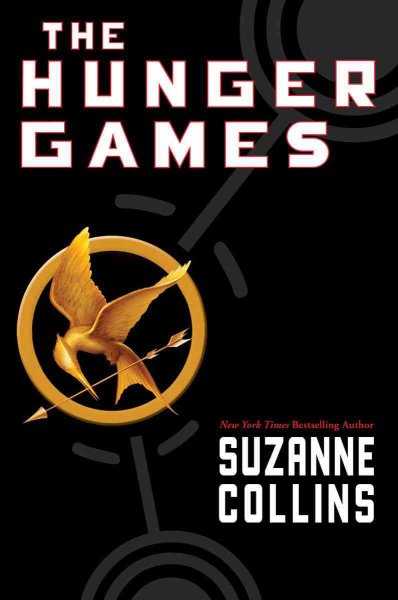
I think that the Hunger Games series are among the few examples of movie versions that are better than the books they're based on.  I loved the first two books in the series, but the first three movies get to me even more; they make me believe in the power of sacrifice, love, and freedom.  But then I tend to prefer the big truths of life to be told through fantasy stories.  The library has just gotten the last movie in the series, The Hunger Games: Mockingjay, Part 2, and there is a long waiting list on it at the moment.  We’d be glad to reserve it for you. 


Your reaction to a book or a movie is likely to be different than your neighbor’s, which is why the library offers such a wide variety of materials.  I hope you’ll stop in to find something that is inspirational to you.  

Wednesday, November 26, 2014

Popular books for the people on your shopping list

by Beth Cronk, Litchfield head librarian

As you work on your Christmas shopping, are you looking for some book ideas for people on your lists?  I can tell you which new titles are popular in our library system.  One of these might be just the right thing for someone you know
.
Killing Patton: The Strange Death of World War II’s Most Audacious General is the latest in the Bill O’Reilly and Martin Dugard “Killing” series.  In this one, the authors question whether the general’s death from injuries sustained in a car accident was really accidental.  It’s the in-demand book in our library system right now.  For the history buffs and conspiracy theorists on your list.

The last book in Nora Roberts’ Cousins O’Dwyer trilogy has just come out.  Blood Magick wraps up the series about the Dark Witch gift shop in County Mayo, Ireland, and the owner’s forbidden romance.  For fans of Nora Roberts and paranormal romance.

John Grisham has a new novel out, Gray Mountain.  This is his 27th to be published.   A young lawyer is laid off from her comfortable New York job and ends up working in legal aid in Appalachia.  This is the first time Grisham has had a female main character.  For fans of legal thrillers and those who care about environmental causes. 

Laura Ingalls Wilder’s autobiography has just been published and is expected to be available from booksellers this month after a couple of delays this fall.  Pioneer Girl: The Annotated Autobiography is a project of the South Dakota State Historical Society, which is a very small publisher.  This is Laura’s first draft of her life story, written in 1930 before she began her novels.  This book contains new background research by the historical society that gives context to Laura’s story.  It should be interesting to see which stories were left out of the eventual series because they were too mature for children, as well as to find out what Laura’s original writing was like.  This book is on my Christmas list, and I keep hearing that other people are asking for it, too.  For Little House fans, obviously.

Stolen from the Garden: The Kidnapping of Virginia Piper is the true story of a wealthy socialite who was kidnapped for ransom in Orono in 1972.  Author William Swanson reviewed documents about the case and interviewed many of the people who were closely involved.  In the end, Swanson makes his case for what he thinks really happened.  For fans of true crime.

James Patterson books are always popular, and this is true for the latest Alex Cross novel, Hope to Die.  Patterson has a new book out every other month or so, pairing up with other writers to pump them out.  This one appears to be written by Patterson himself, and the reviews are good.  Detective Alex Cross is battling a psychotic genius to get his family back.  This isn’t the place to start reading the series, so it would be for people who are already fans of these thrillers.

Lila is the latest novel from Pulitzer Prize-winner Marilynne Robinson.  It tells the story of the minister’s wife from Robinson’s novel Gilead, who is the mother of the main character of her novel Home.  It isn’t necessary to have read the other two books, however.  This novel tells of Lila’s difficult years of abuse and homelessness and how she adjusts to her new life with such a past.  For literary readers. 


One good thing about library books is that you can check them out for free before you decide if you want to buy a copy for yourself.  The titles I’m covering here have waiting lists because they are so popular, so you may or may not have the chance to borrow these before Christmas.  But we have shelves full of so many other things that you can preview before you make your Christmas list or do your shopping.  Have a happy holiday season!

Monday, August 12, 2013

Remembering the Dakota Conflict

by Beth Cronk, Litchfield head librarian

Although the Dakota Conflict was especially on our minds last year because it was the 150th anniversary, we are again at the anniversary in the middle of August.  Many local people come to the library looking for books on the history of the war, and our collection does include many books about it, old and new. 

One of the newest is practically a pamphlet at 22 pages.  Red Earth, White Road by Janet Timmerman is part of the Rural and Regional Essay Series.  The series is supported and distributed by the Society for the Study of Local and Regional History at Southwest Minnesota State University.  Red Earth, White Road tells the true story of the LaFramboises, a mixed-race family caught between the two sides of the U.S.-Dakota Conflict. 

Birch Coulie: The Epic Battle of the Dakota War is a nonfiction account of the decisive battle, written by John Christgau and published in 2012.  It should not be confused with the 1957 novel Birch Coulie by Bernard Frances Ederer, which we also have in the library.  The Christgau book is described as dramatic but accurate and balanced.
Local author Dean Urdahl’s Uprising Saga centers on the Dakota Conflict and its aftermath, within the context of the Civil War.  The four novels in the series are Uprising, Retribution, Pursuit, and Conspiracy.  Representative Urdahl was a history teacher for 35 years, and he incorporated his extensive knowledge of this time period into his novels.

 38 Nooses: Lincoln,Little Crow, and the Beginning of Frontier’s End tells the story of the conflict through the stories of several people: Little Crow; Sarah Wakefield, a captive of the Dakota who was vilified for defending them; Bishop Henry Benjamin Whipple, an advocate for the Indians’ cause; and President Lincoln.  This nonfiction book by Scott W. Berg has gotten great reviews nationwide.  As he details the stories of these individuals, Berg also places the Minnesota events in the context of the Civil War, the history of the Dakota, and the U.S.-Indian wars.

 The Dakota Prisonerof War Letters is a collection of letters written by the Dakota men imprisoned at Camp McClellan in Davenport, Iowa, after their death sentences were commuted.  Dakota elders and retired Presbyterian ministers Clifford Canku and Michael Simon translated and chose the fifty letters included in the book.  The book provides the text of the letters in the original Dakota, the literal translation word-by-word into English, and a translation into contemporary Standard English.  The letters have been stored at the Minnesota Historical Society for decades.  They were written to Stephen Riggs, a Presbyterian missionary who created the written Dakota language.  He shared the letters with the prisoners’ families.  This book is unique because these are the prisoners’ own written accounts of what happened during the conflict and at the prison camp, never before published.


These are just some of the recent books related to the conflict that we have in our collection; older books are available, as well.  We also have resources on microfilm.  We have manuscripts from the Dakota Conflict of 1862 collection and other documents from the Minnesota Historical Society that relate to the conflict.  Our staff can show you how to use the microfilm reader if you’d like to explore those resources, or we can direct you to any of the books that you would like to find.

Friday, November 2, 2012

How to Read Minnesotan


by Beth Cronk, Litchfield head librarian

Come to the library to find some new books with Minnesota ties.

The Minnesota Book of Skills
The Minnesota Book of Skills: Your Guide to Smoking Whitefish, Sauna Etiquette, Tick Extraction, and More is a fun, brand-new book from the Minnesota Historical Society Press.  Author Chris Niskanen has put together a collection of short overviews of many topics, such as building your own backyard ice rink, portaging in the BWCA, finding agates, and backing up a trailer.  I was curious to read the sauna etiquette section, since my grandma had a wood-burning sauna I used often as a child.  I learned from the book that there’s a Finnish word for the combined smell of the steam, wood, and woodsmoke of a sauna: löyly.  Now I know that it’s löyly that makes me powerfully nostalgic for Saturday sauna nights.  This is a book I plan to read further and probably give for Christmas gifts, because I think it’s both useful and entertaining.

We Sinners
Another book I look forward to reading doesn’t take place in Minnesota, but it could have been set here because the same religious and ethnic group lives in our area.  We Sinners by Hanna Pylväinen is a novel about a Finnish Laestadian Lutheran family in Michigan.    Each chapter is told by a different person in the eleven-member Rovaniemi family.  Some of the children stay in the church, and others leave.  Some readers have told me that they loved it and learned so much more about Finnish Lutherans, while others have said they’ve been disappointed that it didn’t go deeper.  The final chapter, which takes place at the founding of the Laestadian church, tends to confuse most readers; it’s intended as historical perspective.    Amazon named this one of its best books of the month in August, and it has gotten good reviews elsewhere for Pylväinen's spare, nuanced writing.

Cooking With Pavarotti
A Litchfield writer praised for her nuanced writing, Nancy Paddock has a new book of poetry out this year that our library has added to the collection this fall.  Cooking with Pavarotti includes poems on the culinary arts and many other subjects.  This book is published by Red Dragonfly Press.  We do not yet have Joe Paddock’s new book, but I will find a copy for our library.

Mni Sota Makoce
Another new book from the Minnesota Historical Society Press is Mni Sota Makoce: The Land of the Dakota.  According to the book, “The Dakota phrase Mni Sota Makoce, Land Where the Waters Reflect the Clouds, gives the state of Minnesota its name.” The book tells the story of the Dakota people in Minnesota: creation stories , archaeological history, interactions and treaties with European Americans, and modern efforts to reclaim traditional cultural places.

One Drop in a Sea of Blue
Yet another book from the MHS Press, One Drop in a Sea of Blue: The Liberators of the Ninth Minnesota, tells a little-known story of the Civil War.  In 1863, 38 men from the Ninth Minnesota Regiment held a train at gunpoint to free a fugitive slave and his family who had been captured and were being shipped out of state to be sold.  Because it happened in Missouri where the soldiers were not to interfere with Union loyalists who were slaveholders, the soldiers were charged with treason and imprisoned without trial for two months.  Their case was debated in the U.S. Senate.  The book follows these 38 after their release, as they rejoined their regiment to be defeated at Brice Crossroads.  Some were imprisoned at Andersonville stockade.  The Ninth suffered unusually high mortality rates at Andersonville, but those who continued to fight helped to win the western theater of the war.    Fourteen of the 38 liberators survived the war and left behind accounts of their wartime experiences.  Author John B. Lundstrom tells a carefully researched story that is being described as a microcosm of the entire Civil War experience.

A library should have books that cover local interests.  I hope you’ll find something that interests you among these new additions.

Friday, March 23, 2012

Find Minnesota's best new fiction at our library

by Beth Cronk, Litchfield head librarian


Last week I told you about the nominees for two of the nonfiction categories of the Minnesota Book Award. This week I’ll tell you about the fiction categories for adults.

In the novel and short story category, four books are nominated: In Caddis Wood by Mary Francois Rockcastle, The Law of Miracles and Other Stories by Gregory Blake Smith, The Long-Shining Waters by Danielle Sosin, and Merit Badges by Kevin Fenton. We have the Rockcastle and Sosin novels.

In Caddis Wood: A Novel is about a couple whose long marriage is in jeopardy. The story is told in alternating perspectives of husband and wife as they gather with their grown children at their cabin in Wisconsin. It reflects on the competing demands of love, family, and career, incorporating the woods around them as an essential part of their memories together. Rockcastle is the director of the Creative Writing Programs at Hamline University.

The Long-Shining Waters won the Milkweed National Fiction Prize in 2011. It tells the stories of three women who lived by Lake Superior at very different times. The first is an Ojibwe woman in 1622, the second a Norwegian immigrant in 1902, and the third a bar owner in 2000. Sosin says she wrote her debut novel to answer the question, “What is it about Lake Superior that makes it so powerful, and haunting and mysterious?”

The four novels nominated in the category of genre fiction are Big Wheat by Richard A. Thompson, The Bone House by Brian Freeman, Death of the Mantis by Michael Stanley, and Northwest Angle by William Kent Krueger. We have all of these books at our library.

Big Wheat: A Tale of Bindlestiffs and Blood is a murder mystery that takes place among the threshing industry of the plains in 1919. The main character Charlie witnesses a serial killer burying his latest victim in a harvested wheat field before he joins a traveling threshing crew. Soon both the killer and the law are after him as a witness and a suspect. Reviewers say that the history is as appealing as the mystery, as the book covers the time when threshing machines were replacing manual labor.

The Bone House is a modern mystery set in Wisconsin and Florida. A high school teacher loses his job in Door County over accusations of an affair with a student. A year later the student’s younger sister is found dead near where the teacher and his wife are vacationing. A detective works with the wife to solve the murder.

Death of the Mantis: A Detective Kubu Mystery is set in Botswana. Detective David “Kubu” Bengu investigates a series of murders that seem to be committed by a nomadic tribe. Kubu travels deep into the Kalahari, struggling to solve the mystery and to stay alive. Michael Stanley is the pen name of two retired professors, Michael Sears and Stanley Trollip. Sears lives in South Africa and Trollip divides his time between Minnesota and Africa.

Northwest Angle: A Novel is the latest in the Cork O’Connor series of mysteries. Cork and his daughter are on a houseboat vacation on Lake of the Woods when a violent storm strands them. They discover the body of a teenage girl who had been tortured and a baby boy who is still alive. Cork must solve the murder and the identity of the baby while protecting his own family from the killers.

If you’re a fiction reader, check out these titles to find some of the best fiction produced by Minnesota writers in the past year.

Friday, April 22, 2011

New critically-acclaimed books

4/7/11
by Beth Cronk, Litchfield head librarian
The Litchfield Library has just gotten some new books that reviewers have ranked as some of the best of the past year.   They run the gamut from philosophy to historical fiction to cookbooks.
How to Live: Or a Life of Montaigne in One Question and Twenty Attempts at an Answer, by Sarah Bakewell,  was the winner of the 2010 National Book Critics Circle Award for Biography and received glowing reviews from the New York Times Book Review and many regional newspapers.   This biography of the philosopher and writer is approached as a list of twenty ways to live well, addressing issues that are still relevant today:  Don’t worry about death.  Pay attention.  Question everything.   In fact, the book’s writer describes Michel de Montaigne as a 16th-century blogger: a skeptical, curious, and playful thinker and essayist.
On the fiction side, The Irresistible Henry House by Lisa Grunwald was another well-reviewed book of the year.  The character Henry House has been compared to Forrest Gump for the ways in which he goes through significant moments in mid-20th-century history.  He begins life as a “practice baby” in a college home economics program in the 1940s, an experience that teaches him how to charm women but avoid becoming attached.  The book follows Henry’s life through the changes of the 1950s and ‘60s.
Tasting Freedom: Octavius Catto and the Battle for Equality in Civil War America is a nonfiction book about a civil rights activist who lived long before the civil rights era of the twentieth century.  Catto was well-known in his time as a teacher, as an orator who worked with Frederick Douglass, and as a second-baseman for Philadelphia’s black baseball team.  This well-written book covers the largely-forgotten early efforts to gain basic rights for African-Americans. 
Another nonfiction book, Through the Language Glass: Why the World Looks Different in Other Languages, by linguist Guy Deutscher, addresses the question of whether culture and language affect each other.   Can different languages lead a person to think in different ways?  This book has been described as entertaining and easy to read, even while being an intellectual look at language.
Rock musician Patti Smith’s memoir Just Kids won the 2010 National Book Award for nonfiction.  Smith is known as a poetic songwriter, and she applied her writing talent to this description of her long-time relationship with photographer Robert Mapplethorpe and the chaotic, creative world of artists they lived among from the late 1960s through the ‘70s. 
The Twelfth Imam, by best-selling author Joel Rosenberg, is a Christian political thriller about an Iranian-American CIA operative working to infiltrate the Iranian government and avoid an apocalyptic war.  Reviewers call the novel gripping and fast-paced, with well-crafted characters.
The Killing Storm is Kathryn Casey’s third Sarah Armstrong thriller.  Texas Ranger Armstrong investigates ritual killings of cattle and the kidnapping of a 4-year-old boy, while a hurricane approaches Houston.  The main character faces complex personal issues throughout this suspenseful mystery.  Library Journal recommends it for fans of J.A. Jance.
Readers of epic fantasy may want to check out Mark Charan Newton’s debut novel Nights of Villjamur.  The first installment in the Legends of the Red Sun series incorporates murder mystery, making this a genre-crossing novel, described as having unusual characters and compelling writing.
On the more practical side, one of the best how-to books of the year was The Gourmet Cookie Book: The Single Best Recipe from Each Year 1941-2009.  This cookbook is full of artful photographs and 68 cookie recipes of all types, reflecting the kinds that were popular in each decade.
You can find these and a wide variety of other fiction and non-fiction books on the new-books shelf at our library.